Subjects
Art
At King’s House School, art is an integral part of a well-rounded education and all pupils are given the opportunity to develop their creativity. There is a strong emphasis on experimentation, critical thinking and problem solving and all units are contextualised in art history.
Pupils are offered a rich and varied curriculum, exploring ceramics, printmaking, sculpture and mixed media, as well as drawing and painting within a fully equipped, dedicated art room. Digital media is also taught, enabling them to create work using graphic software.
Pupils learn about artists, art movements and practices from a diverse range of cultures and histories and art is seen as an invaluable way to engage with the world around them.
Extra Curricular Opportunities
Outside the timetable, pupils have the chance to attend art clubs, workshops and a variety of trips. Throughout the year, there are also opportunities to celebrate their work with whole school exhibitions and art competitions.
Various trips are organised throughout the year, such as botanical drawing workshops at Kew Gardens and landscape drawing at Richmond’s Terrace Gardens.
We are proud of the number of pupils who have achieved art scholarships to senior schools in recent years.
Computing & Digital Learning
The core function of the Computing and Digital Literacy Department is to provide a comprehensive all round technical education. We aim for all pupils to make excellent progress in their understanding of computational thinking, as well as being digitally literate.
We understand how the changes in technology are impacting our students’ lives both in and out of school, and so equip pupils with the relevant knowledge to be able to strive with technology and tackle challenges appropriately.
Dedicated computer suites are fitted across the school, and all pupils use Chromebooks and iPads. Each classroom is equipped with interactive whiteboards and televisions.
Our younger pupils will learn how to use different devices, such as tablets, laptops and personal computers, enhancing their fine motor skills, as well as learning logical thinking from a young age. Pupils will learn to use some office-based software using G-Suite and Google Classroom, audio and video recording hardware and software, as well as enhancing their coding and logical thinking skills.
The older pupils will learn enhanced use of office software, creating their own programs using block coding and moving onto textual programming, as well as learning the theory around computing. They also learn to create and code physical devices, making use of input and output, and take on a multi-software, data-driven, decision-making project.
Extra-Curricular Activities
Outside of the classroom, the department offers extra-curricular clubs such as Advanced Coding, MTech and Touch Typing.
The department runs an annual STEM (Science, Technology, Engineering and Maths) Day, several competitions throughout the year, computing-based trips.
Design Technology
Design Technology aims to nurture creativity and teach the skills needed to devise brilliant ideas and turn them into reality.
Pupils are encouraged to design in a practical context, using a range of materials. They work on one or two projects per term, the majority of which are centred in product design, but we also cover aspects of engineering, graphics, systems and controls and textiles. All the projects incorporate elements of research, design context, theory, testing and evaluation and result in some form of outcome that the pupils can take home.
Many of the themes that covered are cross-curricular, with links to science, history, geography and drama. Some outcomes are used as props or form parts of the set for year group productions.
Across all year groups, pupils are guided to reflect on the impact that their designs and they, themselves, as consumers, have on the wider world and environment. They are encouraged to be courageous, innovative problem solvers.
Pupils in Years 4 – 8 have one timetabled hour of Design and Technology every week in the workshop. Extra-curricular opportunities also include:
- Teams of students in Year 7 and 8 take part in the Richmond Rotary Cub Technology Tournament.
- A weekly DT Club during break time, where pupils of all ages can work on their own projects or develop their class outcomes.
- Students are keen to help create props and build sets for the productions during their break times.
- Student run clubs, such as City Club, where they use recycled materials to create cities based on different themes each term. This provides lots of opportunity to socialise with pupils in different classes and year groups
Senior Department Curriculum
- In Year 4, pupils are introduced to basic hand tools by working in teams to create models in response to a design brief. They also create hand puppets and make and test paper rockets.
- In Year 5, pupils begin to use the larger workshop machinery like bench drills and scroll saws to create products in wood and plastics. They learn to use computer software to design and laser cut silhouette lamps, for which they also solder simple circuits. They complete marble run challenges in the summer term.
- In Year 6, projects include cutting and heat bending acrylic mobile phone stands, creating novelty pocket torches and blister packaging with the vacuum former and racing their own model wind powered boats.
- In Year 7, pupils investigate mechanisms through a mini pinball project, develop chocolate Easter egg branding for their sustainable packaging and pour their own chocolate eggs! They explore engineering concepts through a project about structures.
- In Year 8, pupils design and create their own set of working portable speakers, by applying processes and theory that they have developed during their time at King’s House. They also experiment with pewter casting and smart materials in their final terms.
Drama
The Drama Department at King’s House School is vibrant and thriving. Each year group has a large scale production to look forward to, with a part for everyone on stage or behind the scenes.
Our prop and costume stores are well stocked, ensuring each show is professional. Past productions include James and the Giant Peach, A Midsummer Night’s Dream, Comedy of Errors and Hairspray.
Extra-Curricular Activities
LAMDA lessons are very popular with the pupils, and lessons led by specialist tutors provide guided tuition towards graded drama examinations. Two specialist tutors deliver 1:1, duo and group lessons, and pupils can also perform in assemblies and showcase to practice their pieces before exams.
For pupils interested in technical theatre, there is the chance to operate our advanced lighting and sound equipment at performances. Drama clubs also provide a space for the increased development of performance and improvisation skills and LAMDA lessons offer guided tuition towards graded Drama examinations, led by specialist tutors.
Senior Department Curriculum
- In Year 4 pupils are introduced to performance and story telling, learning the basics of staging, characterisation and script writing. Each pupil produces a radio play and in the Autumn Term there is a whole year production.
- In Year 5 we begin with an introduction to Shakespeare, exploring his characters and themes in the run up to a whole year production in the Spring. In the Summer Term pupils learn about collaboration, exploration of creative ideas and improvisation.
- Year 6 begins with status and more detailed character work through the exploration of text. We produce a full year production in the Spring Term, which may be devised or scripted. In the Summer Term we explore site-specific theatre and ensemble work.
- Pupils in Year 7 start the academic year with a large-scale production, a highly anticipated event in the King’s House calendar. The Spring Term sees the pupils look at issue-based theatre. This leads to the creation of student-led workshops and performances. In the Summer we explore Murder Mystery, script writing & devising from a stimulus.
- In their final year at King’s House, pupils look at puppetry and physical theatre. Employing techniques from world-class companies such as Frantic Assembly and Gyre & Gimbl, pupils devise their own group performances for peer evaluation. In the Spring we look at text & sub-text as well as advanced skills in monologue and performance, and in the Summer Term produce a student-led comedy cabaret, showcasing the wide array of talents on offer.
English
The English Department at King’s House School aims to provide a varied, stimulating and engaging scheme of work, which will help all pupils to fulfil their potential.
The teachers in the department aim to:
- Ensure that all pupils develop key literacy skills
- Build a love of learning
- Foster a love of reading and literature
- Help each pupil to fulfil his potential to the maximum
- Produce schemes of work that are challenging, varied, enjoyable and suited to the needs of all the pupils
- Share a selection of literature from a variety of authors and genres
- Pupils develop an understanding of how language works through speech, grammar, punctuation, and literary devices such as metaphor simile and tone.
Pupils are encouraged to develop self-expression and produce authentic writing that reflects how they feel. They have the basic building blocks to enable them to develop an understanding of Standard English, along with how to write appropriately for different audiences.
They experience a wide range of literature, including fiction and non-fiction, prose and poetry, and develop their own responses to them. Pupils are then given the opportunity to write in a range of formats and encouraged to write with feeling and imagination.
They also develop as confident speakers in an atmosphere in which each pupil feels that their opinion is valued and listened to courteously.
French
The principle aim in teaching French is to give our pupils confidence in their own abilities and the knowledge to communicate in a foreign language. By doing so, we lay the foundation, not only for any future study of French, but also the study of other languages. As their knowledge increases, pupils become able to manipulate and apply language in all four skill areas – speaking, listening, reading and writing.
An integral part of studying French is the opportunity for pupils to learn about and appreciate other cultures and lifestyles, in both Europe and other French-speaking parts of the world.
Cross-curricular links form another element of our teaching. We take the opportunities to make pupils aware of links with a range of other subjects. For example, we link to English and Latin by looking for cognates or origins of French words. Mental arithmetic is taught in French, and the geography and history of France.
Extra-Curricular Activities
For their residential trip in Year 8, pupils spend a week in Normandy, helping to improve their French and immersing themselves in the language. The week is spent trying a variety of activities including mountain biking, circus skills, a visit to a traditional French market, a visit to a cheese maker at a goat farm and a visit to the Mont St Michel.
Geography
Geography at King’s House School involves pupils acquiring skills, knowledge and understanding of the world around them. This ranges from their immediate surroundings in Richmond, to the highest mountain ranges and largest oceans.
In the Junior Department, pupils begin to build their geographical enquiry skills as well as their appreciation for some of the world’s major countries and physical features.
Classroom study is accompanied by real world examples of the concepts being explored and there are often opportunities for field work.
Senior Department Curriculum
In Year 4, focus is placed on the local environment in Richmond and a case study of a contrasting location. Recent Year 4s have enjoyed looking at the Caribbean country of St Lucia.
Year 5 begins with the introduction of Ordnance Survey map skills and pupils have an opportunity to apply these in both a classroom and outside setting. Time is then spent looking at a country case study (recent examples include Brazil and India), and they compare the lives of children living in these countries with their own daily activities.
In Years 6 to 8, we follow the I.S.E.B. Geography syllabus with topics including:
- Rivers and coasts
- Tectonic processes
- Weather and climate
- Population and settlement
- Transport and industry
Recent trips have included a residential trip to Norfolk, a study day at Box Hill in Surrey and local orienteering activities.
History
History helps us to understand our past, which in turn allows us to understand our present. It provides an opportunity for pupils to learn about their own place in the world and how this relates to historical event and societies.
At King’s House School, we aim to teach interactive and stimulating history. We do this through a range of kinaesthetic activities, outside speakers and of course, trips! History is taught in the School by class teachers in the Junior Department and by specialist teachers in the Senior Department.
Topics in each year group include:
- Year 4 study the development of Britain from the Anglo-Saxons to the Norman Conquest.
- Year 5 look at Mughal India, America and the French Revolution.
- Pupils in Year 6 are introduced to the 19th and 20th century, investigating the concept of Imperialism, slavery and war.
- Years 7 and 8 study the Early Modern period for Common Entrance, and look at international history.
Latin
Latin weaves into the curriculum through English, French, Science and Computing.
The study of Latin gives pupils a greater understanding of correct grammatical usage in English and significantly aids their spelling. While focusing on Latin derivations, they become intrigued by the roots of their own language: they find themselves drawn to the various meanings of words in English and even parallels in French vocabulary.
Pupils have even used the regularity and formulaic nature of what they have learned to write code in their Computing classes to translate sentences from Latin.
Senior Department Curriculum
Pupils begin their journey into the Classical World at the end of Year 5 when they are introduced to Latin and the breadth of the Roman Empire, as well as its numerous legacies.
From Year 6 they have two hours of Latin a week, where they learn Latin grammar, the formation of basic sentences and begin to build a vocabulary.
“Who Said Latin’s Dead” specially written for Common Entrance, offers a workbook-centred scheme of work in which we follow the exploits of two 21st century students of Latin who are transported back to the Colosseum in Rome at the time of Emperor Hadrian. Using the narrative of the story, our heroes, Guy and Olivia, learn about life (and death) in Rome and try to find their way back to 21st Century England. On this journey, the pupils learn all the grammar and vocabulary necessary to be proficient at Common Entrance level and beyond.
From Year 7, pupils are streamed into three sets in Latin and in Year 8, those who are being prepared for Scholarship exams are given extra tuition, which will bring them close to GCSE level.
Extra-Curricular Activities
Technology enhances the teaching of Latin, such as through the use of Chromebooks in lessons. Beyond the classroom, Latin has a prominent place at King’s House with termly Latin speaking competitions, a whole school vocab competition and a team represents the school in the Victor Verborum contest at Hampton School each year. There is also a bi-annual trip to Italy to visit Vesuvius, Pompeii and Rome.
Maths
Maths at King’s House helps students to think critically and precisely and to learn how to apply mathematical principles to their lives, as well as in other key subjects such as Science and Technology.
The department explores the wide subject of Maths in an engaging, enjoyable and accessible way to all pupils by making appropriate provision for extension and support. By doing so, we aim to develop young adults who are able to use logical reasoning, practice systematic working and problem-solving skills to instil enthusiasm and a real understanding of their subject.
Our Maths teachers do this by:
- Catering for pupils of differing abilities by providing suitable extension and support materials
- Developing mathematics in context, to allow pupils to understand its use outside the classroom
- Teaching the subject in an interesting and fun way by providing a range of activities during each topic
- Using a variety of resources to enhance learning, such as use of ICT.
- Helping build on each pupil’s strengths and develop their weaknesses through constructive assessment.
- Continually reflecting on the provision of mathematics within the school and developing the programmes of study and resources to enhance this provision for the pupils.
Junior Department Curriculum
Pupils work from the new Maths No Problem, supplemented by a wide variety of teaching resources. There is a weekly problem-solving lesson using problems and investigations from sources such as nrich or The National Strategies.
Senior Department Curriculum
In Year 5 Pupils work from “Galore Park Mathematics Year 5”.
In Years 6, 7 and 8 Pupils work from the Essential Maths scheme. The work pupils cover fulfils requirements of the ISEB syllabus and hence, prepares pupils for the Common Entrance examination at both 11+ and 13+ and pre-tests. In addition, it fulfils the criteria of the National Curriculum.
To help pupils develop their mental maths skills, Schofield & Sims are issued (from Year 3) according to age and ability and pupils are encouraged to complete the book for homework, exam revision and in their free time as well.
Assessment
The Senior Department assessment includes; formal examinations occurring twice a year in November and June. Year 8s have an extra mock exam in January in preparation for their Common Entrance exam in June.
In addition to the School assessment policy, mathematics teachers also incorporate times-table, mental arithmetic and topic tests. When doing these, a numerical mark is used e.g. 17/20 or percentage. Pupils may expect a class average and the teacher uses the mean to do this, however, they will need to explain the drawbacks of using the mean with the class beforehand.
Differentiation
The Department aims to provide lessons with as much differentiation as appropriate to maximise each pupil’s progress and feeling of achievement. Generally, the differentiation can be split into 3 levels – support, core and extended. Teachers try to provide a different type of activity for the extension as a way of encouraging pupils to think about the topic in a way which is engaging and challenging.
SEND, EAL and G&T
Pupils who need support are offered programs designed to reinforce basic number facts, number bonds and telling time. These are done through the SEN Department and the pupils are withdrawn from lessons. There is a test at the end of the program. In examinations, the pupil may be given a scribe or a reader depending on the recommendations stated on their Educational Psychologist report.
If a pupil is identified as requiring support in English, in order to understand the Mathematics, they are given a teaching assistant who will help the pupil in class. There may be a need for the pupil to be withdrawn to be given extra English support. In examinations, the pupil may be given a scribe or a reader.
For pupils who have been identified as Gifted and Talented, provision will be provided in class by the teacher to help extend and enrich their learning in Maths. Setting the classes already provides a suitable environment for extension. Furthermore, the Department enters pupils into national and local maths competitions as well as master classes throughout the year.
Extra Curricular Activities
A wide range of maths extra curricular activities take place, including:
- Maths Masterclass for selected Year 5 and 6 pupils
- Maths drop in surgery for all year groups
- Senior Department House Maths Quiz
- LWC Logic cup for Year 5 & 6 Lord Wandsworth College
- Year 5 & 6 Primary Maths Challenge
- Year 8 Scholars Maths sessions
- Year 7 & 8 Junior Maths Challenge
- Maths Day
Music
The culture for music making at King’s House School is both vibrant and pervasive. The Music Department is committed to providing a stimulating and challenging all-round music education, whilst identifying and nurturing each pupil’s talents, to maximise their musical potential.
All pupils from Nursery to Year 8 participate in weekly music lessons, which take place in our well-equipped music rooms. We also ensure that all pupils have access to high-quality individual tuition on a variety of instruments and we work with a team of peripatetic teachers to achieve this. The instruments on offer include piano, violin, cello, flute, clarinet, saxophone, guitar, electric guitar, drum kit and voice
Our music curriculum enables pupils to develop their skills in creativity, music theory, music appreciation and performance, whilst exploring a broad variety of topics and experiences. We run introductory lessons on recorder, ukulele and violin as part of our class music lessons and the teachers in the Music Department are experienced at identifying where pupils show aptitude for a particular instrument.
Extra-Curricular Activities
There is a colourful array of extracurricular musical activities on offer and we encourage all pupils to engage with music in the world around them and to maintain a sense of curiosity and open-mindedness towards various musical styles. The standard of choral singing is excellent and, through participation in our many choirs, the pupils have plenty of opportunity to develop vocally, from membership of the Year 1 Singing Club, right through to our elite Chamber Choir in the Senior Department. Other clubs they can take part in include:
- String and Recorder Ensembles
- Brass Ensemble
- Clarinet Ensemble
- Saxophone Ensemble
- Senior String Ensemble
- Senior Orchestra
- Rock Bands
- King’s House Singers
Pupils perform throughout the year at concerts including
- Breakfast Concerts several times each term
- Annual Michael Stuckey Singing Competition
- Nativity and Christmas Concerts and the Senior Department Carol Service
- Spring Concerts
- Summer Concert at the Sports Ground
Our programme for musical enrichment also includes trips to hear concerts given by leading orchestras and ensembles; workshops given in school by professional musicians; collaboration with external groups such as the Ernest Read Symphony Orchestra; international Choir Tours, as well as participation in local music festivals and celebrations. Our hope is to promote a life-long enthusiasm and passion for the subject, both as future music-makers and music-lovers.
We are very proud that boys have achieved Music Scholarships and Awards to senior schools in recent years.
Religious Studies
Religious Studies plays an important part in the curriculum. Along with the other Humanities subjects, it widens pupils’ horizons and encourages them to look beyond their own personal experience. All pupils are encouraged to develop open minds to new and different concepts, to express their personal opinions and to ask questions freely.
The curriculum is broad, with pupils learning about not only Christianity, the life of Jesus and the Old Testament but also the other five main World Religions in detail. We teach pupils tolerance and respect for all cultures and faiths.
Living in London, we are lucky to have the opportunity to go to different religious buildings and we also have speakers coming into share their stories.
Year 7 and 8 study a syllabus which marries religion with different ethical and philosophical dilemmas.
Science
The Science curriculum at King’s House provides pupils with the opportunity to investigate science through a wide variety of topics including investigations, resources and contexts, which will enthuse their learning and stimulate a life-long interest in this exciting subject.
As science is such a broad subject, we highlight both the breadth and depth of scientific study, balancing the value of practical skills with abstract theory and its many applications in the world around us.
We strive to ensure that learning in science is accessible to all pupils with appropriate support and extension.
We encourage pupils to question the world around them and to gain a greater understanding of their environment. This includes the implications of scientific discovery and research throughout the ages as well as its significance in the future.
In addition, we prepare pupils for their appropriate entrance examinations, helping them to achieve their full potential in this subject and move on to their next school with confidence.
Science field trips also enhance the curriculum, such as to Richmond Park.
Sport
At King’s House School, we look to create a fun and supportive environment to allow children to flourish in sport and PE, regardless of age or ability. A dedicated and experienced team of teachers oversee the sport provision. King’s House has a sport for all policy, with every boy representing the School in the core sports of football, rugby and cricket.
Pupils in the Junior Department have one games session per week, as well as separate PE and swimming lessons, whilst pupils in the Senior Department have two games sessions and an hour-long PE lesson every week. All teams have regular fixtures during the week and on Saturday mornings.
An innovative and modern department-wide approach looks to produce young athletes who are independent and resilient. Courage, character, effort and the willingness to learn from mistakes are rewarded. Everything we do is to engender a lifelong love for sport and physical activity.
King’s House School is fortunate to have our own sports ground in Chiswick, which boasts 35 acres of extensive and versatile sporting facilities and which is maintained to a high standard. These facilities have helped the School maintain an excellent reputation for sport.
In addition to the core sports, pupils also get the chance to partake in swimming, cross-country, athletics, tennis, table tennis, basketball, gymnastics and volleyball through our co-curricular and PE provision.
Extra-Curricular Activities
During the year, we host tournaments and festivals for pupils of all abilities. The school also runs biennial overseas tours open to all abilities, with our most recent trips travelling to France (Rugby) and Spain (Football). A football tour to Spain is currently being planned.
King’s House students are currently Surrey Prep School champions in Cricket and Borough Champions in Swimming. Pupils are often recognised through the award of scholarships to senior schools such as Hampton, Epsom College, KCS Wimbledon, Reeds, and Millfield. We have also had several pupils selected to County squads and the Harlequins DPP Academy.
Outdoor Learning
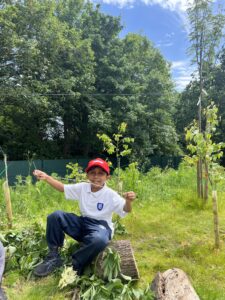
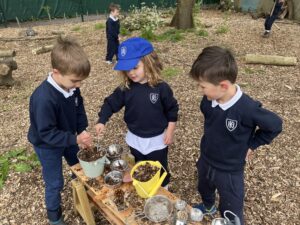
An area of the Sports Ground has been recently redeveloped into an outdoor learning space, ‘The Nest’, and we are lucky enough to have a teacher who has completed their official Forest School Leader training to lead our young learners! This has created a wonderful space for our pre-school classes (Squirrels and Rabbits), Reception and Year 1 to have Forest School sessions, exploring the space and learning from the outdoors.